
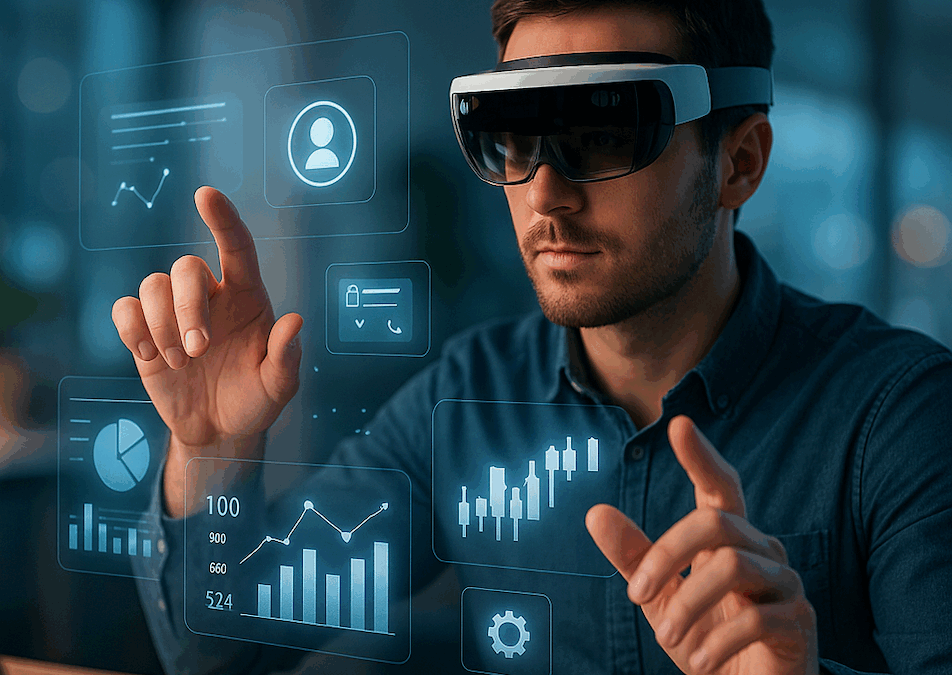
What is AR (Augmented Reality)?
Augmented Reality (AR) is a technology that overlays digital information onto the real world in real time. Unlike Virtual Reality (VR), which immerses users in a fully digital environment, AR enhances your existing environment by adding interactive digital elements such as images, sounds, or text via devices like smartphones, AR glasses, or headsets.
Examples of AR in action:
- Snapchat filters that add effects to your face
- IKEA Place app that lets you visualize furniture in your room
- Google Lens identifying objects or text in the real world
- Heads-up displays in vehicles
🧠 How does AR work?
AR combines several technologies:
- Camera and sensors to detect the physical environment
- Processors to understand user input and render graphics
- Display technology (phone screen, AR glasses) to show the digital overlay
- AI and computer vision for object recognition and spatial mapping
💡 The result: A seamless blend of digital content and physical space.
🌍 How will AR change the future?
🔬 Healthcare
- Surgical visualization with AR headsets
- Medical training using AR simulations
- Remote assistance for diagnosis or emergency response
- Patient education through 3D visualization of anatomy
💡 AR will make healthcare more precise, interactive, and accessible.
🛒 Retail and E-commerce
- Try-before-you-buy tools: makeup, glasses, furniture
- Virtual store tours and product customization
- Enhanced in-store experiences with AR navigation and product info
💡 AR enhances customer confidence and drives engagement.
🧑🏫 Education and Training
- Interactive, 3D learning experiences
- Visualize complex subjects like anatomy, astronomy, or physics
- Real-time translation and language learning aids
- Hands-on training in engineering, aviation, and more
💡 Learning becomes more immersive, engaging, and memorable.
🏗️ Architecture and Engineering
- Real-time visualization of building models
- AR-assisted construction guidance
- Error detection before real-world implementation
💡 AR reduces cost and boosts collaboration and safety in projects.
🎮 Gaming and Entertainment
- AR gaming apps like Pokémon Go
- Interactive storytelling and real-world quests
- Sports broadcasts with enhanced stats and visual cues
- Live concerts and performances with AR enhancements
💡 The boundary between reality and game will blur further.
🏙 Urban Development and Navigation
- Smart city data overlays (traffic, weather, public transport)
- AR-powered pedestrian navigation
- Real estate previews and neighborhood information on-the-go
💡 AR will make cities more user-friendly and transparent.
🧑💼 Business and Remote Work
- Virtual collaboration in shared AR environments
- Remote maintenance and assistance using AR glasses
- Enhanced presentations and data visualization
💡 AR will redefine how teams interact across distances.
🔍 Current Limitations and Challenges
- High development costs
- Hardware limitations and accessibility
- Privacy and data concerns (especially with facial recognition)
- User fatigue or sensory overload
💡 As technology matures, these barriers are likely to diminish.
🚀 The future of AR – what’s next?
- AR glasses becoming mainstream (e.g. Apple Vision Pro, Meta, Snap)
- 5G and cloud computing powering real-time AR at scale
- AI integration for smarter, adaptive AR environments
- Mass adoption in both consumer and enterprise markets
✅ Summary – what is AR and how will it change the future?
🌐 Augmented Reality bridges the digital and physical worlds, adding context and interactivity
🛠 It is revolutionizing industries like healthcare, retail, education, and entertainment
🚀 AR’s growth will lead to smarter cities, more immersive experiences, and better decision-making
🧠 The key to success lies in user-centered design, ethical use, and accessibility
AR is not just a trend – it’s a paradigm shift in how we experience and interact with reality. 🌍✨🕶️