
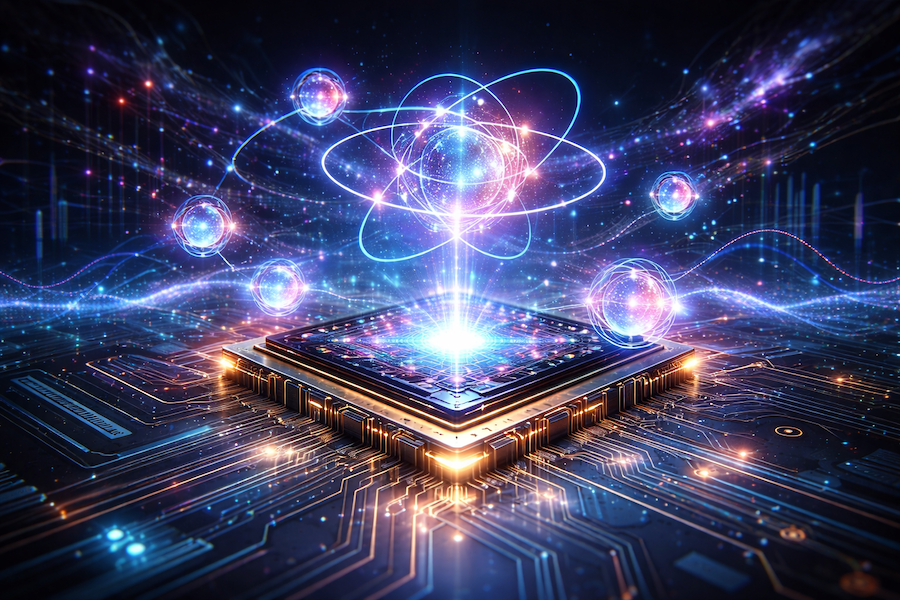
Quantum computing represents one of the most significant technological shifts of the modern era. Unlike traditional computers, which process information in a linear and binary way, quantum computers use the laws of physics to perform calculations that were previously considered impossible. As this technology matures, it has the potential to reshape industries, scientific research, and everyday life.
This article explains what quantum computing is, how it works, and how it may transform society, from healthcare and security to work, communication, and global problem-solving.
What Is Quantum Computing?
Quantum computing is a type of computing that uses quantum mechanics to process information.
Instead of traditional bits that are either:
- 0
- 1
quantum computers use qubits, which can exist in multiple states simultaneously.
This allows quantum systems to:
- process vast amounts of data at once
- solve certain problems exponentially faster
- model complex systems more accurately
How Is Quantum Computing Different from Classical Computing?
Classical computers:
- follow deterministic logic
- perform calculations step by step
- scale linearly with increased power
Quantum computers:
- leverage probability
- perform parallel computations
- scale in fundamentally different ways
This difference makes quantum computing especially powerful for specific tasks.
Key Principles Behind Quantum Computing
Superposition
Superposition allows a qubit to exist as:
- 0
- 1
- both at the same time
This enables quantum computers to explore many possible solutions simultaneously.
Entanglement
Entangled qubits:
- remain connected regardless of distance
- influence each other instantly
- act as a single system
Entanglement allows quantum computers to perform highly coordinated calculations.
Quantum Interference
Quantum interference:
- amplifies correct solutions
- cancels out incorrect ones
This helps quantum algorithms converge on optimal results efficiently.
How Quantum Computing Will Transform Healthcare
Quantum computing has the potential to revolutionize medicine.
Drug Discovery and Molecular Modeling
Quantum computers can:
- simulate molecular interactions precisely
- reduce trial-and-error experimentation
- accelerate drug development
This could lead to faster treatments for complex diseases.
Personalized Medicine
By analyzing massive biological datasets, quantum systems may:
- tailor treatments to individual genetics
- optimize dosage and therapy plans
- improve diagnostic accuracy
This would mark a major shift toward precision healthcare.
Impact on Work and Industry
Quantum computing will reshape how work is performed across sectors.
Optimization and Logistics
Quantum systems can optimize:
- supply chains
- transportation routes
- resource allocation
Industries such as manufacturing, aviation, and energy stand to benefit greatly.
Financial Modeling and Risk Analysis
In finance, quantum computing may:
- model market behavior more accurately
- detect risk patterns earlier
- improve fraud detection
Complex simulations that take days today could take minutes.
Cybersecurity and Encryption
Quantum computing presents both opportunities and challenges for security.
Breaking Traditional Encryption
Quantum algorithms could:
- break many existing encryption methods
- render current security standards obsolete
This has serious implications for data protection worldwide.
Quantum-Safe Security
At the same time, quantum computing enables:
- new encryption techniques
- stronger, quantum-resistant security protocols
Emerging technologies like Enhancing Safety Through Virtual Reality (VR) may also benefit from quantum-driven simulations and risk modeling, particularly in training and safety-critical environments.
How Quantum Computing Will Change Scientific Research
Quantum computers can model systems too complex for classical machines.
Climate and Environmental Modeling
Quantum simulations could:
- predict climate patterns more accurately
- model ecosystem interactions
- optimize renewable energy systems
This may support better decision-making for global challenges.
Materials Science
Quantum computing can help:
- design new materials
- improve batteries and semiconductors
- create stronger, lighter structures
Innovation cycles could be dramatically shortened.
Everyday Life and Consumer Impact
Although most people will not own a quantum computer, its effects will be widespread.
Smarter Services and Infrastructure
Quantum-powered systems may lead to:
- more efficient energy grids
- optimized traffic systems
- improved urban planning
These changes can enhance daily convenience and sustainability.
Artificial Intelligence and Machine Learning
Quantum computing could:
- accelerate AI training
- improve pattern recognition
- handle complex datasets more effectively
This would enable smarter, more adaptive technologies.
Challenges and Limitations
Despite its promise, quantum computing faces major obstacles.
Technical Barriers
Current challenges include:
- fragile qubits
- error correction
- extreme cooling requirements
Building stable, scalable quantum systems remains difficult.
Cost and Accessibility
Quantum computers are:
- expensive to build
- complex to operate
- limited to specialized environments
Widespread access will take time.
Ethical and Societal Considerations
As with any transformative technology, ethical questions arise.
Technology Gaps and Inequality
Unequal access to quantum capabilities could:
- widen global power imbalances
- concentrate technological control
- create new economic divides
Governance and collaboration will be critical.
Responsible Development
Ensuring responsible use requires:
- international cooperation
- updated regulations
- transparent research practices
Long-term impact depends on how the technology is guided.
When Will Quantum Computing Become Mainstream?
Quantum computing is still emerging.
Current outlook:
- short-term use in research and industry
- gradual integration into cloud services
- long-term impact over the next decades
Transformation will be incremental rather than sudden.
Common Misconceptions About Quantum Computing
- it will replace classical computers entirely
- it works for all types of problems
- it is only theoretical
In reality, quantum computing complements existing technology.
Preparing for a Quantum Future
Organizations and individuals can prepare by:
- understanding the basics
- monitoring developments
- investing in education and skills
Awareness will be key as adoption grows.
Summary
Quantum computing has the potential to transform how we live, work, and interact with the world by enabling new levels of computational power. From healthcare and science to cybersecurity and infrastructure, its applications could reshape entire industries. While significant technical and ethical challenges remain, the progress being made suggests that quantum computing will play a central role in the future of technology. Understanding its foundations today helps prepare society for the changes it will bring tomorrow.